The Real Competitive Advantage in the Photo Booth Industry

I want to tell you something that took me years and a lot of expensive lessons to fully understand.
The photo booth industry has a gear problem. Not a gear shortage. A gear obsession. Every year, founders show up to expos, scan the trade show floor, and walk away convinced that the next booth, the next software update, the next AI feature is the thing that's finally going to separate them from everyone else in their market.
And every year, three months later, everyone has it.
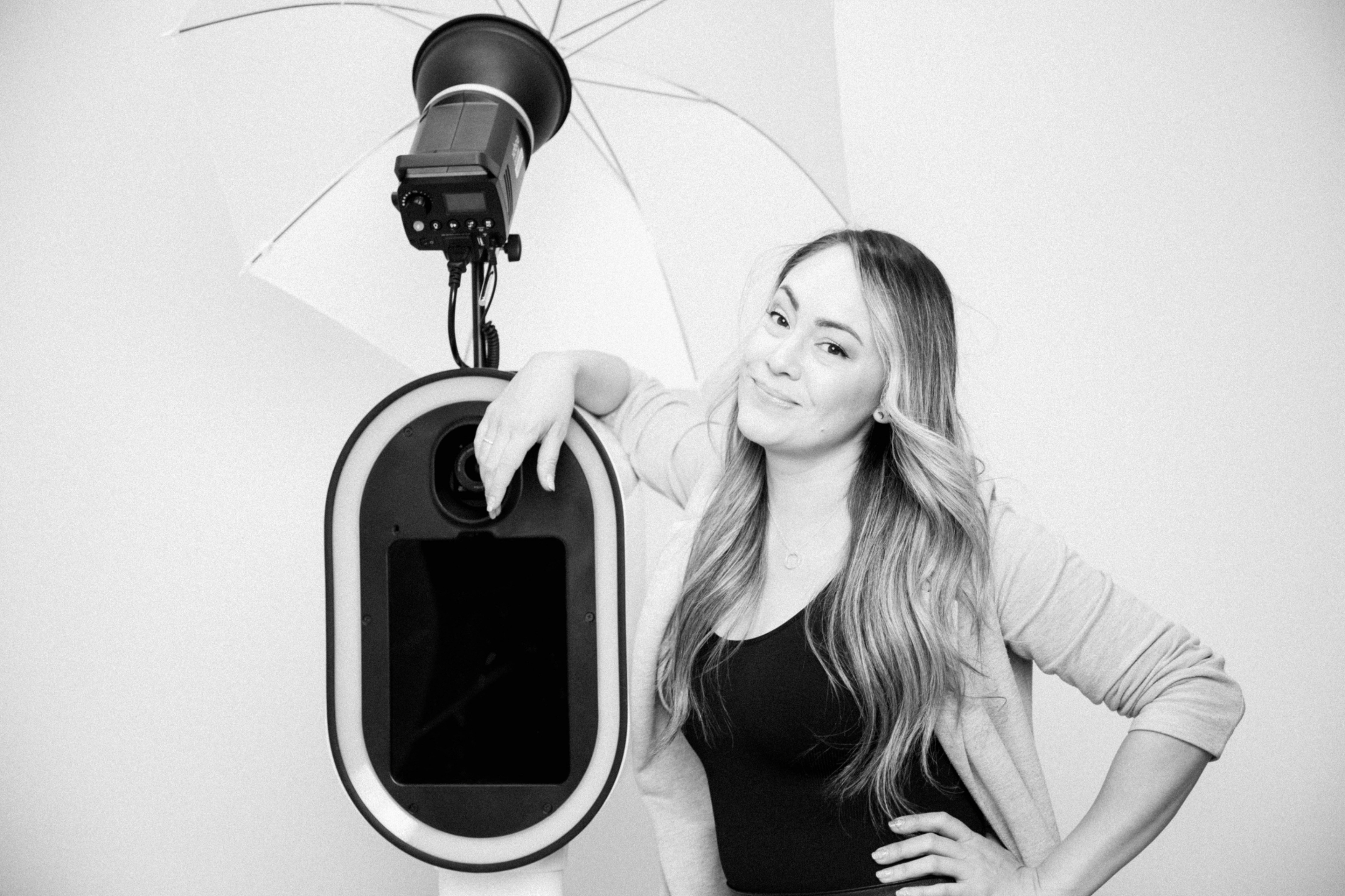
I've been in this industry for over 11 years. I built MDRN Photobooth Co. and MDRN Activations into multiple 7-figure brands, mostly out of Canada, servicing all of North America. And the single most important thing I've learned, the thing that drove six figures in year one and kept us scaling from there, is that your competitive advantage in the photo booth business has never been, and will never be, the equipment.
It's you.
This post breaks down exactly what that means, why it matters right now more than ever, and how to actually use it to build a photo booth business that stands apart, attracts better clients, and scales without you having to buy another piece of gear to do it.
Why Photo Booth Equipment Will Never Be Your Competitive Advantage
Everyone Has the Same Booth
Here's the reality of this industry: we all go to the same expos. We all have access to the same equipment. We all get the same software updates at the same time. A new AI model drops on a Monday and by Friday three companies have already built it into their activations, each using it a completely different way.
I learned this lesson on day one. I walked into WPPI, fell in love with a legacy photo booth from Photo Booth Supply Co., and charged $9,000 USD to my parents' emergency American Express card without telling them. I had a vision. I got back to Ottawa completely convinced I had the edge.
Then I looked around and realized everyone had the same booth in a different shell.
That could have been a breaking point. Instead it became the foundation of everything. Because if the gear wasn't going to differentiate me, I had to figure out what would.
The Tools Don't Define the Business. Your Perspective Does.
When I started, I hated photo booths. Genuinely. I wouldn't get caught dead in one. The props were questionable, the lighting was bad, the designs were ugly, and the prints never cut properly. So when I decided to get into this industry, I made a decision: we were going to be different.
We were intentional about every backdrop. Obsessive about white balance. Precise about framing and lighting. We treated every setup like a styled shoot, not a vendor setup.
What happened was that planners and coordinators stopped seeing us as just another photo booth company. They started seeing us as a creative partner. And that shift, from commodity to creative partner, is what drove us to six figures in our very first year while most other companies were still competing on price.
The tools were the same. The perspective was completely different.
The tools don't define your business. Your perspective on how you deliver them does. And that is the only competitive advantage nobody can copy from you.
The Most Powerful Business Tool You Already Have: Nostalgia
What's Old Always Becomes New Again
Here's something that used to confuse me about trends until it suddenly made everything click: the most powerful experiences are never about what's newest. They're about what feels most human.
Polaroids are everywhere right now. Twenty-year-olds who have better cameras on their phones than most of us had in our entire childhood are choosing to shoot on vintage Canon point-and-shoot cameras. People are spending eight euros, sixteen Canadian dollars, on a single photo strip from a vintage booth in Amsterdam and waiting five minutes for it to print.
Why?
Because the value was never in the image quality. It was in the experience of getting it. The anticipation of watching a Polaroid develop in your hand. The feeling of shaking it. The nostalgia of something that takes you back.
People don't connect with technology. They connect with emotion. And the trends that keep cycling back, Polaroids, trading cards, lenticular, vintage photo strips, all come back for the same reason: nostalgia never dies.
Why Nostalgia Is a Business Strategy, Not Just a Feeling
Right now, every major corporate brand is trying to connect with millennials. We have the majority of the buying power. And we are nostalgic in a very specific, very generational way.
Think about trading cards. For anyone born in the 1990s, they were part of childhood. Baseball cards, Garbage Pail Kids, hockey cards, all of it. So when a brand creates an activation where you get your face on a custom branded trading card, something you can take home, show everyone on the internet, and actually keep, you are more than happy to hand over your email address and jump in front of the camera.
That is the power of pairing emotion and nostalgia with a brand activation. And that is exactly what corporate clients are paying for right now. Nearly every corporate job we have done in the past year has involved trading cards. That is not a coincidence.
For me personally, it was lenticular prints. Growing up in Canada, every school planner had a lenticular holographic cover. I can still hear the sound of running my fingers across it. The second I found out LA Photo Party had the capability to print lenticulars, I was done. I knew my demographic would feel that immediately. We built an entire product line around it. Today, lenticular events are the second biggest revenue driver in our entire business.
That wasn't a trend I read about in a report. That was something I felt. And that personal connection is exactly what made it land with clients.
While trends cycle because feelings cycle, nostalgia never dies. The founders who understand this build activations that hit differently because they're building from something real.
Your Background Is Your Greatest Differentiator
Here's the thing about nostalgia as a business strategy: it is completely personal. Where you grew up, your culture, your childhood, all of it gives you a different lens than every other photo booth founder in your market.
You could hand the same setup to 100 different founders and get 100 completely different experiences. Because each one of them is looking at it differently, connecting it to different memories, different communities, different emotional reference points.
That is your edge. Not the gear. You.
Ask yourself: what from your past actually connects with you? What brings you genuine joy? What would you have lost your mind over as a kid? That is where your most powerful, most bookable, most uncopyable activations are hiding.
How to Stop Being a Commodity and Start Being a Creative Partner
The Commodity Problem
Go search "photo booth" in any wedding planning group right now. What do you see? Companies that look almost identical. The same talking points. GIFs, Boomerangs, custom templates. Similar branding. Similar pricing. Similar everything.
When clients can't tell you apart from the next company, they shop on price. And competing on price in this industry is a race to the bottom you will never win. There will always be someone willing to do it cheaper. Always.
The 5 Biggest Pricing Mistakes Six-Figure Photo Booth Founders Make (And How to Fix Them)
The founders who break out of that cycle are the ones who make a deliberate decision to stop being a commodity and start being something else entirely.
What the Shift Actually Looks Like
Being a creative partner is not a rebrand. It is a repositioning. And it starts with how you talk about what you do.
Stop talking about what your booth does. Start talking about what it creates.
When we positioned MDRN in its early days, we stopped leading with features and started leading with emotion. We were intentional about every element of the experience. Every backdrop choice. Every template design. Every lighting decision. We were obsessive about the details most photo booth companies were not even thinking about.
And what happened is that we stopped being seen as a vendor and started being seen as a partner. Planners and coordinators began calling us in not because we were the cheapest option, but because they trusted us to elevate the experience of their events.
That is the shift. And it does not require a new booth to make it happen.
What to Do With New Technology (And What to Stop Doing)
The Industry Will Always Chase the Next Shiny Thing
AI is genuinely exciting right now. You can transform people into anything. Tulip fields they have never visited. Oktoberfest outfits they definitely do not own. Every software has a different version of it and the creativity available is truly unlimited.
Enclosed booths are making a massive comeback. Cabina, Nova, and Pasa are all on the trade show floor right now, each with their own unique features and advantages, each going to attract different kinds of clients. Glam bots have replaced 360s as the video experience everyone wants. And now we are starting to see photo adjacent technology come in, draw-me bots that take your photo and illustrate you, sometimes beautifully, sometimes like a potato riding a donkey through a field.
It is a lot. And it is moving fast.
But here is the truth: the industry will always be chasing the next shiny thing. That is never going to stop. And if you spend your energy trying to keep up with every new release, you will exhaust yourself and still not stand out.
The Only Question That Actually Matters
The real question is never what is the next big thing.
It is what are you going to do with it that nobody else can do?
Guests do not remember your print speed. They do not remember your exact setup or the specs of your equipment. They remember the emotion of the event. Jumping into a photo with college friends they have not seen in years. Getting a print they are going to frame. Running around a trade show floor and getting a trading card with their own face on it.
That is what sticks. That is what they talk about. That is what builds a business.
So when you are walking the trade show floor, when you are evaluating new software, when you are deciding what to invest in next, ask yourself one thing: what can I do with this that nobody else can?
Because the answer to that question is the entire future of your business.
The real question is never what is the next big thing. It is what are you going to do with it that nobody else can do?
Building a Lasting Business on Emotion
Joy Shows Up in Your Business
If you want to build a lasting, scalable photo booth business, build it on emotion. Build it on what brings you genuine joy. Because that joy shows up in your business whether you intend it to or not. It shows up in how you present, how you connect with clients, and the activations you create.
The gear is the same for all of us. The trends will keep changing. But the future of your business is actually you. Your perspective. Your history. Your point of view on what a photo experience should feel like.
Nobody else has that. And nobody can buy it from a vendor on the trade show floor.
Key Takeaways
-
Equipment is never your competitive advantage in the photo booth industry. Your perspective on how you deliver it is.
-
Nostalgia and emotion are the most powerful tools in your business right now and they are directly tied to your personal history and culture
-
The trends will always keep changing. The feelings behind them never do.
-
Shifting from commodity to creative partner starts with being intentional about every element of the experience you create
-
Every time you encounter new technology ask: what can I do with this that nobody else can?
Frequently Asked Questions
How do I stand out in a saturated photo booth market? Stop competing on features and price. Position yourself as a creative partner rather than a commodity by leading with the emotional experience you create rather than the technical specs of your equipment. Bring your unique perspective, background, and point of view into every activation you build. That combination is impossible to replicate.
What are the biggest photo booth trends right now? Nostalgia-driven experiences are dominating right now. Trading cards, lenticular prints, vintage photo stripse, and Polaroid-style activations are all performing extremely well, particularly for corporate clients targeting millennials. On the technology side, enclosed booths like Cabina, Nova, and Pasa, AI transformation experiences, and glam bots are all strong. The key is not which trend you follow but what unique angle you bring to it.
Why is nostalgia such a powerful tool for photo booth activations? Because people connect with emotion, not technology. Nostalgia triggers a feeling, and feelings are what people remember long after the event is over. Corporate brands targeting millennials are actively looking for activations that tap into generational nostalgia because it drives the kind of engagement, email capture, and social sharing that matters to their marketing goals.
What should I look for when evaluating new photo booth technology? Stop asking what the technology does and start asking what you can do with it that nobody else in your market can. The founders who build something truly differentiated are the ones who bring their own perspective, culture, and creative point of view to the tools available to everyone. The technology is a vehicle. Your perspective is the destination.
How do I transition from being seen as a vendor to being seen as a creative partner? It starts with intentionality. Be deliberate about every element of your setup, your backdrops, your lighting, your templates, your attendant experience. Stop leading with features in your messaging and start leading with the emotional experience you create. When clients feel the difference in how you show up, the conversation shifts from price to partnership.
How did Catalina Bloch build a 7-figure photo booth business?
By making one foundational decision early on: to be a creative partner, not a commodity. She was intentional and obsessive about every detail of her setups from day one, repositioned her brand around emotional storytelling rather than equipment features, and consistently refined her target audience so that her messaging always attracted the right clients. That approach drove six figures in year one and kept compounding from there.
Listen to the Full Episode
This blog covers the key frameworks but the full keynote is in the episode. Listen to hear it the way it was delivered: live, unfiltered, and in front of a room full of photo booth founders who needed to hear it.
SUBSCRIBE FOR ALL THE PHOTO BOOTH TIPS.
By subscribing to our newsletter, you consent to receive promotional emails, updates, and other marketing communications from our company. We respect your privacy and will never share your information with third parties without your consent. You may unsubscribe at any time by clicking the unsubscribe link in any email.